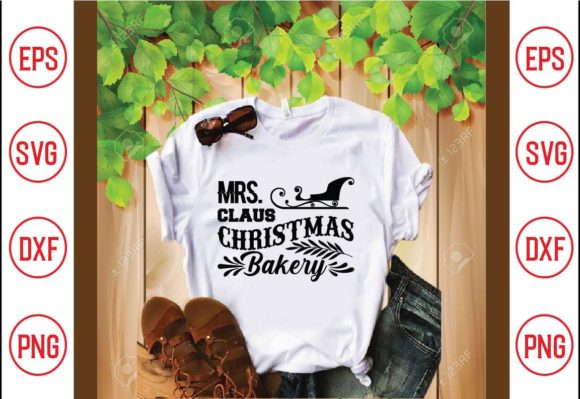
Mrs. Claus Christmas Bakery SVG: An Embroidery Review
As a professional embroidery digitizer and product reviewer, I approach every new graphic with a specific question: will this translate beautifully from screen to stitch? When evaluating the Mrs. Claus Christmas Bakery SVG, my focus shifts immediately from its origins as a cutting file for Cricut or Silhouette machines to its potential as a centerpiece for textile art. While marketed primarily within T-Shirt Designs and Graphics categories for vinyl applications, this artwork possesses a nostalgic warmth that begs for thread. For Etsy sellers, boutique owners, and hobbyists looking to expand their holiday inventory, understanding how this specific aesthetic performs under the needle is crucial for creating high-value handmade products.
Capturing the Whimsical Holiday Aesthetic
The first impression of the Mrs. Claus Christmas Bakery SVG is one of cozy tradition. The visual personality leans heavily into vintage storybook charm rather than modern minimalism. This mood is significant for embroidery because it dictates the stitching strategy. Unlike bold, blocky logos that forgive poor digitizing, this design relies on intricate details—likely flourishes, script lettering, and delicate facial features—that define Mrs. Claus’s character. As an embroidery file candidate, this artwork suggests a project that feels heirloom-quality. It naturally belongs on items meant to be cherished, such as personalized gifts for grandmothers, custom apparel for family holiday photos, or boutique merchandise that evokes a sense of timeless comfort.
For creative entrepreneurs, this aesthetic is a double-edged sword. It offers high emotional resonance for buyers seeking authentic holiday decor, but it demands respect during the digitization process. The shape and layout appear balanced for center-chest placement on sweatshirts or as a primary focal point on tote bags. However, the transition from vector graphic to machine embroidery design requires careful interpretation of those fine lines to ensure they do not get lost in the fabric texture.
Real-World Application: Stitching a Holiday Apron
To truly judge the viability of this design, I mentally placed it onto a real-life project: a custom embroidered apron intended for a small shop product line. Aprons are fantastic canvases for bakery-themed graphics, but they present unique challenges. They are often made of medium-weight cotton or canvas, which holds stitches well, but they also endure frequent washing and physical wear.
In this scenario, using the Mrs. Claus Christmas Bakery SVG as a direct trace would be risky. Instead, I envision converting key elements into an applique design. Imagine Mrs. Claus’s dress or hat rendered in festive red and green fabric patches, secured with a satin stitch border, while the "Bakery" text is executed in a dense fill stitch or elegant running stitch. This hybrid approach reduces overall stitch density, preventing the apron from becoming stiff or bulletproof—a common issue when embroidering complex graphics on functional garments. For the finished product, this method maintains the softness of the apron while ensuring the design remains crisp and durable through holiday meal prep and subsequent laundering. Customers recognize this level of intentionality; it separates a cheap iron-on transfer from a premium handmade product.
Navigating Fabric Limitations and Hoop Sizes
While the versatility of this graphic is appealing, there are specific environments where caution is necessary. If you are planning baby embroidery on stretchy onesies or knit caps, the original complexity of the Mrs. Claus Christmas Bakery SVG may need simplification. Stretchy fabrics require significant stabilizer to prevent puckering, and overly dense stitch areas can cause the garment to distort or tear over time. In these cases, I recommend isolating just the face or a single icon from the full composition to create a smaller, more manageable embroidery project.
Dark fabrics also demand strategic planning. If the original SVG relies on thin white lines to depict flour dust or lace details, those elements must be thickened during digitizing to remain visible against navy or forest green backgrounds. Furthermore, consider your hoop size constraints. Detailed corners and tiny lettering often suffer when scaled down for 4x4 hoops. If the design loses legibility at smaller sizes, it is better suited for larger formats like pillow covers, tea towels, or blanket blocks where the stitch count can accommodate the necessary detail without compromising clarity.
Elevating Product Value Through Technical Precision
For Etsy sellers and commercial embroidery businesses, the way you execute this design directly impacts perceived value and customer trust. A jagged outline or misregistered color breaks the immersion of the holiday theme instantly. Visual appeal in embroidery is technical. When reviewing this asset for your catalog, consider how stitch direction affects the final sheen. Rayon or polyester threads catch light differently; aligning fill stitches to follow the contours of Mrs. Claus’s form adds dimensionality that flat vinyl cannot achieve.
This attention to detail enhances brand consistency. If you sell digital embroidery files derived from this SVG, your customers expect clean run paths and minimal jumps. If you sell finished goods, the professionalism of the stitching validates a higher price point. Buyers engaging with holiday embroidery are often purchasing sentiment; flawless execution honors that sentiment. Whether used for craft fair products or printable mockups to gauge interest, the design must look intentional. A well-digitized version of this graphic signals to buyers that you understand both the art of embroidery and the spirit of the season.
Essential Designer Notes for Success
Before committing the Mrs. Claus Christmas Bakery SVG to your production schedule, adhere to these practical guidelines to ensure success across various applications:
- Test on Scrap Fabric First: Never run a new digitization directly on a sellable item. Test on a scrap of the exact fabric and stabilizer combination you intend to use for the final product to check for registration issues or puckering.
- Verify Licensing Terms: Since this is originally a cutting file, confirm whether the creator permits derivative machine embroidery designs for commercial sale. Clarify if you can sell the digitized file itself or only the finished physical product.
- Check Thread Color Contrast: Review the design in black and white mockups before selecting thread colors. Ensure that critical details have sufficient contrast against your chosen garment color, especially for dark holiday themes.
- Assess Stabilizer Needs: Match your stabilizer to the fabric weight and stitch density. Tear-away may suffice for sturdy canvas tote bags, but cut-away is likely mandatory for sweatshirt embroidery or stretchy knits to maintain shape.
- Simplify for Small Formats: If targeting baby clothes or caps, manually remove non-essential background elements. Tiny text often becomes illegible thread blobs; replace it with larger, bolder fonts or omit it entirely.
- Inspect Stitch Density: Avoid excessive layering. If converting to applique, ensure the tack-down stitches are secure but not so dense that they create a hard ridge that could irritate skin on wearable items.
- Validate File Compatibility: Although the source is an SVG, ensure your digitizing software imports the vectors cleanly. Sometimes open nodes in cutting files require closing before they can be assigned stitch types effectively.
Ultimately, the Mrs. Claus Christmas Bakery SVG offers a beautiful foundation for holiday collections, provided it is treated with the technical respect embroidery demands. By adapting this graphic thoughtfully for textiles, makers can transform a simple digital download into a tangible piece of holiday magic that resonates deeply with customers and stands the test of time.