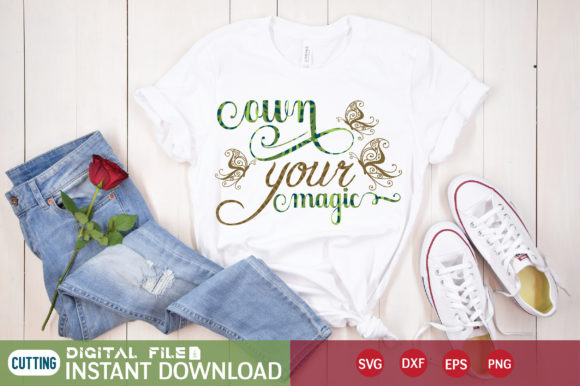
Own Your Magic Sublimation: A Designer’s Review
As a professional designer who bridges the gap between digital graphics and tangible textiles, I approach every new asset with a critical eye. When evaluating Own Your Magic Sublimation, my first thought isn't just about how it looks on a screen, but how it translates when needle meets fabric. While this product is categorized under Print Templates and Graphics as an instant download cutting file compatible with machines like Cricut and Silhouette, its aesthetic potential for mixed-media embroidery projects is significant. For embroidery designers, Etsy sellers, and makers, understanding how to adapt this graphic style into a stitched reality is the key to creating a high-value handmade product.
First Impressions: Mood and Visual Personality
The phrase "Own Your Magic" carries an immediate sense of empowerment and whimsy. Visually, designs in this niche typically feature flowing scripts, celestial motifs, or bold typography that suggests confidence. As a reviewer, I look for clean vector lines in the source SVG because those are the bones of a good machine embroidery design. If the original graphic has jagged edges or overly complex gradients, it will be a nightmare to digitize. Fortunately, the sublimation-focused nature of this file usually implies vibrant, distinct color separations and smooth curves.
This design naturally evokes a mood suitable for personalized gifts and custom apparel aimed at women, teens, and children. It feels modern yet timeless, avoiding trends that might date the finished product too quickly. For a craft business owner, this versatility is crucial. You aren't just buying a graphic; you are acquiring a visual theme that can anchor an entire collection of nursery decor, boutique branding, or holiday embroidery items. The layout appears balanced enough to serve as a central focal point on a sweatshirt or tote bag without overwhelming the garment's structure.
Real-World Application: The Custom Sweatshirt Test
To truly judge the viability of Own Your Magic Sublimation for embroidery, I mentally ran through a specific client scenario: creating a custom embroidered sweatshirt for a small shop product launch. Sweatshirts are a staple for Etsy sellers, but they present unique challenges due to their thickness and stretch.
In this real-life application, I would treat the SVG not as a direct stitch file, but as a premium template for digitizing. The goal was to create a centerpiece chest design that felt soft to the touch, avoiding the "bulletproof vest" effect of overly dense stitching. Because the original art is designed for sublimation, it likely contains color blends that standard thread cannot replicate. My strategy involved converting those blended areas into creative fill stitch patterns or using thread blending techniques to mimic the gradient. For the text elements, a satin stitch would provide that classic, raised sheen that customers associate with high-quality commercial embroidery.
The result of such an adaptation is a textured, tactile interpretation of the digital art. Customers react positively to this hybrid approach because it offers the detail of a print with the durability and perceived value of embroidery. This elevates the item from a simple graphic tee to a premium piece of custom apparel, justifying a higher price point and enhancing brand consistency for your shop.
Navigating Fabric Constraints and Hoop Sizes
While the design is versatile, practical judgment requires acknowledging where it might struggle. Not every fabric is a canvas for intricate magic. When planning an embroidery project using this asset, consider the following constraints:
- Stretchy Fabrics: On knits like jersey or lightweight sweatshirt fleece, the design must be stabilized aggressively. Without proper cut-away stabilizer, the "magic" will distort, leading to puckering and misaligned registration points.
- Small Hoop Sizes: If you are working with a 4x4 hoop size, you may need to simplify the design. Tiny lettering or minute decorative accents present in the full-size SVG often get lost or turn into thread nests when scaled down. Always check the minimum readable size before committing to baby embroidery or sleeve cuffs.
- Textured Surfaces: For items like terry cloth towels or caps, the fine details of a sublimation-style graphic can sink into the pile. Using a water-soluble topping is non-negotiable here to keep the stitches sitting proudly on top of the fabric texture.
- Dark vs. Light Fabrics: Sublimation designs are often optimized for white polyester. When adapting for dark cottons via embroidery, you must account for underlay. Ensure your digitized version includes adequate edge-run underlay to prevent the dark fabric from showing through lighter thread colors.
Enhancing Product Value and Buyer Trust
Using Own Your Magic Sublimation effectively goes beyond technical execution; it impacts how buyers perceive your professionalism. In the saturated market of digital product sellers and handmade creators, clarity and presentation build trust. When listing a finished product derived from this design, use printable mockups that accurately reflect the stitch texture rather than just the flat digital image. This manages customer expectations regarding stitch density and color variation.
Furthermore, the adaptability of this graphic allows for cohesive branding. Imagine offering a matching set: a sublimated mug featuring the exact original colors alongside an embroidered patch or tote bag design featuring the stitched interpretation. This cross-medium consistency signals to buyers that you are a thoughtful creator who understands design assets deeply. Whether used for wedding gifts, corporate merchandise, or personal keepsakes, the intentionality behind the adaptation adds intangible value that mass-produced items lack.
Essential Notes for the Embroidery Professional
Before you load this design into your software or machine, adhere to these professional best practices to ensure success:
- Verify Licensing: Since this is an instant download cutting file, confirm whether the license covers commercial embroidery use. Some licenses allow for physical sales but prohibit selling the digitized embroidery file itself. Protect your business by knowing the terms.
- Test Stitch Density: Never assume the auto-digitize function will handle a sublimation graphic perfectly. Run a test stitch-out on scrap fabric identical to your final project. Check for gaps, excessive pull, or thread breaks.
- Thread Color Matching: Sublimation uses CMYK or RGB color spaces; embroidery uses specific thread brands. Create a physical thread chart comparison against the printed SVG to select the closest Pantone matches. Remember that rayon and polyester threads have different sheens that affect color perception.
- Mockup Validation: Before listing, photograph your actual test stitch-out. Compare it side-by-side with your digital preview. If there are discrepancies in detail level or color vibrancy, adjust your product description to highlight the unique characteristics of the embroidered version.
- Format Compatibility: While the source is an SVG for cutting machines, ensure you export your final embroidery file in formats compatible with your specific machine (PES, DST, JEF, etc.). Do not rely on generic converters for complex designs; use professional digitizing software to maintain integrity.
Ultimately, Own Your Magic Sublimation serves as a fantastic foundation for creative entrepreneurs willing to bridge the digital-physical divide. By treating it as a sophisticated template rather than a plug-and-play solution, you unlock its true potential. The resulting embroidered pieces will carry a level of craftsmanship and artistic intent that resonates with clients, turning a simple graphic into a cherished, tangible expression of magic.